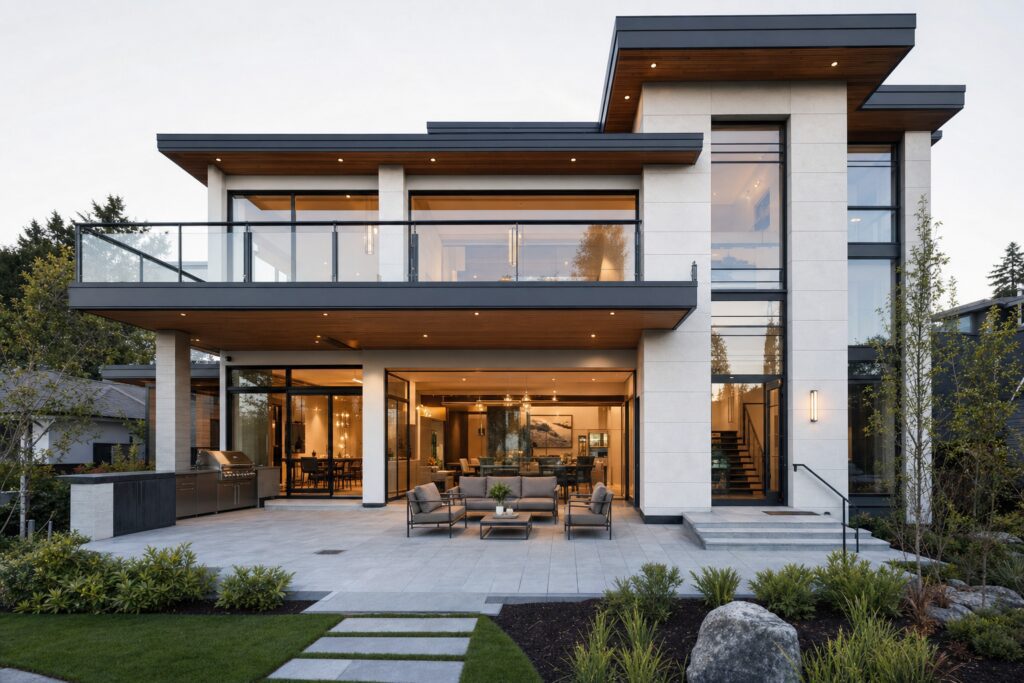
Most homeowners planning a major renovation or custom home build in Metro Vancouver never think about scaffolding until they see it erected around their property. Yet this temporary structure often represents 8-12% of a project’s overall labour allocation and directly impacts construction timelines, worker safety, and the quality of high-elevation work. Understanding what scaffolding is in construction, when it’s legally required in BC, and how different systems affect your project budget can help you make informed decisions and avoid costly delays during permit reviews or site inspections.
Scaffolding is a temporary elevated platform system used to support workers, tools, and materials during construction, maintenance, or repair work at heights. Unlike ladders that provide access only, scaffolding creates a stable work surface where crews can perform detailed tasks safely for extended periods. In Metro Vancouver’s residential and commercial construction landscape, scaffolding plays a critical role in everything from heritage home restorations in Kitsilano to new custom builds on North Shore slopes.
Why Scaffolding Matters More Than Most Homeowners Realize
The right scaffolding system determines whether your project moves forward efficiently or stalls due to safety violations, inadequate access, or worker productivity issues. WorkSafeBC regulations mandate specific scaffolding requirements for work above 3 meters (roughly 10 feet), and non-compliance can shut down your entire site.
Beyond regulatory compliance, scaffolding directly affects the quality of exterior finishes, roofing installations, siding work, and window replacements. When crews work from stable platforms instead of ladders, they deliver cleaner caulking lines, more precise trim installations, and fewer touch-up requirements. Arash Amini and the Avangard Development team evaluate scaffolding needs during pre-construction planning, factoring system rental costs, setup timelines, and municipal inspection schedules into every Metro Vancouver project budget.
Poor scaffolding choices create hidden costs that most homeowners never connect to the original decision. Undersized systems force workers to reposition equipment repeatedly, adding hours to labour schedules. Systems without proper debris netting require extra cleanup time and increase liability exposure for falling objects in densely populated Vancouver neighbourhoods.
Different Types of Scaffolding Used in BC Construction Projects
Not all scaffolding systems suit every project type or building configuration. Metro Vancouver’s mix of heritage homes, modern infills, sloped lots, and strata properties demands flexible solutions that adapt to unique site constraints.
Frame Scaffolding (Most Common for Residential Projects)
Frame scaffolding uses prefabricated steel or aluminum frames connected with cross braces and secured with locking pins. This system dominates residential construction across Burnaby, North Vancouver, and Vancouver because it assembles quickly, adapts to irregular building shapes, and meets WorkSafeBC load capacity requirements without specialized engineering.
Typical frame scaffolding setups for two-storey renovations cost $2,800-$4,500 for a 4-6 week rental period in Metro Vancouver, including delivery, installation, and removal. Three-storey projects or homes with complex rooflines push costs toward $6,000-$8,500 depending on coverage area and access challenges.
Tube and Coupler Scaffolding (For Complex Geometries)
This system uses individual steel tubes connected with adjustable couplers, allowing crews to build scaffolding around curved walls, bay windows, or irregular heritage facades. While more labour-intensive to assemble than frame systems, tube and coupler scaffolding provides unmatched flexibility for Vancouver’s character homes and architecturally distinctive custom builds.
Installation requires certified scaffolding installers familiar with load calculations and bracing requirements. Expect 20-30% higher rental and setup costs compared to standard frame systems, but the investment pays off when working around turrets, wrap-around porches, or other features that standard frames cannot accommodate.
System Scaffolding (For Larger Commercial or Multi-Unit Projects)
System scaffolding (also called modular scaffolding) uses proprietary components that lock together without loose fittings, creating faster assembly and higher load capacities. This system suits multi-unit residential developments, commercial renovations, and projects requiring extended rental periods where setup efficiency outweighs higher daily rental rates.
For duplex and multiplex developments increasingly common under BC’s housing legislation, system scaffolding often provides the most cost-effective solution when rental periods extend beyond 8-10 weeks. The initial setup cost gets amortized across longer timelines, and the superior stability supports multiple trades working simultaneously on different levels.
Rolling Scaffolding (For Interior Work and Shorter Tasks)
Rolling scaffolding (or mobile scaffolding) incorporates locking casters that allow repositioning without full disassembly. Interior renovations involving high ceilings, stairwells, or large open spaces benefit from this mobility. However, WorkSafeBC regulations require specific bracing and stabilization protocols before workers can access rolling platforms.
Most renovation projects in Metro Vancouver use rolling scaffolding for tasks like ceiling installations, upper-level painting, or mechanical rough-ins where frequent repositioning saves significant labour time compared to repeatedly moving frame scaffolding.
BC Building Code and WorkSafeBC Scaffolding Requirements
British Columbia enforces some of North America’s strictest scaffolding regulations through WorkSafeBC’s Occupational Health and Safety Regulation (Part 32). These rules apply to all construction projects, including residential renovations that many homeowners assume operate under relaxed standards.
Any work platform more than 3 meters above grade requires either scaffolding that meets specific load ratings or an engineered fall protection system. For most two-storey renovations, this threshold kicks in at the second-floor level, making compliant scaffolding a legal requirement rather than an optional safety measure.
WorkSafeBC mandates that scaffolding must support at least four times the maximum intended load, including workers, tools, and materials. Standard residential scaffolding typically rates to 225 kg per platform section (roughly 500 lbs), which accommodates two workers plus materials for most tasks. Heavier applications like masonry work or roofing material staging require engineered systems with documented load capacities.
Scaffolding installers in BC must hold valid certification, and all systems over 7.5 meters (approximately 25 feet) require inspection and tagging by a qualified person before use. For three-storey custom homes or properties with challenging elevation changes, Avangard Development coordinates these inspections as part of our construction management services, ensuring WorkSafeBC compliance without delaying critical path activities.
Guardrail, Toe Board, and Fall Protection Requirements
Every scaffolding platform where workers perform tasks requires perimeter guardrails at 1 meter height (approximately 39 inches) with mid-rails and toe boards to prevent tools or materials from falling. These requirements are non-negotiable, even for owner-builder projects or small-scale renovations.
Many homeowners discover these requirements only after municipal building inspectors red-tag non-compliant setups during framing or envelope inspections. The resulting delays while proper scaffolding gets installed and re-inspected can push project timelines back by 1-2 weeks and create downstream scheduling conflicts with trades already booked for specific dates.
When Your Project Legally Requires Scaffolding
WorkSafeBC regulations determine scaffolding requirements based on working height and task duration, not project size or building type. This catches many homeowners off guard, especially those planning exterior work on what they consider small projects.
Any continuous work above 3 meters that cannot be safely performed from a ladder requires scaffolding or an engineered work platform. Painting an entire second-storey exterior, installing new windows across multiple levels, or replacing siding above the first floor all trigger this requirement across Metro Vancouver projects.
Roofing work presents a unique situation. While workers can access many residential roofs via ladders, staging materials, performing tear-offs, or working on steep pitches (above 4:12) often requires scaffolding or roof brackets to meet fall protection standards. The specific requirements depend on roof configuration, pitch, and the scope of work being performed.
For heritage home renovations in Vancouver’s older neighbourhoods like Dunbar, Shaughnessy, or Kerrisdale, scaffolding often becomes essential even for seemingly modest projects. These homes frequently feature complex rooflines, decorative trim at significant heights, and heritage designation requirements that demand careful restoration work impossible to execute safely from ladders.
How Scaffolding Costs Factor Into Your Construction Budget
Scaffolding represents a significant line item that surprises homeowners who focus exclusively on materials and labour when budgeting. Understanding these costs upfront prevents shock when detailed estimates arrive.
Rental costs depend on system type, coverage area, rental duration, and site access challenges. A typical single-family renovation requiring scaffolding on two sides runs $3,500-$5,500 for an 8-week period including delivery, installation, weekly inspections, and removal. Projects requiring complete building wrap-around or three-storey coverage can reach $8,000-$12,000 or more.
Installation and removal typically add 15-25% to base rental costs, though some suppliers bundle these services. Weekly or bi-weekly inspections, required under WorkSafeBC regulations for long-term setups, cost $150-$300 per visit depending on system complexity.
Site access significantly impacts costs in Metro Vancouver’s established neighbourhoods. Properties with narrow side yards, limited street access, or protected landscaping require more labour-intensive hand-carrying of components rather than truck-mounted crane placement. This can add $500-$1,500 to installation costs depending on distance and terrain challenges.
| Project Type | Typical Coverage | Rental Duration | Estimated Cost Range |
|---|---|---|---|
| Single-Storey Addition | One or two sides | 4-6 weeks | $1,800-$3,200 |
| Two-Storey Renovation | Two to three sides | 6-10 weeks | $4,000-$6,500 |
| Three-Storey Custom Home | Full perimeter | 12-16 weeks | $9,000-$15,000 |
| Heritage Facade Restoration | Front elevation, complex | 8-12 weeks | $6,000-$10,000 |
When Arash Amini founded Avangard Development in 2017 after 25 years in construction, one priority was transparent scaffolding planning during design-build projects. Our open-book approach means clients see actual rental quotes, installation timelines, and the reasoning behind system recommendations before committing to project budgets.
Common Scaffolding Mistakes That Delay Metro Vancouver Projects
Even experienced contractors sometimes underestimate scaffolding requirements, creating avoidable delays and cost overruns. Learning from these common mistakes helps homeowners ask better questions during the planning phase.
Underestimating Coverage Area
Many projects start with scaffolding on one or two sides, then require expensive mid-project additions when crews discover they cannot safely access other elevations. This happens frequently with corner lots or homes where initial scopes focused on front facades but trades later need access to sides or rear elevations for flashing installations, trim work, or final painting.
Proper pre-construction planning maps every trade’s access requirements across the entire project timeline, ensuring scaffolding coverage supports all scheduled work without mid-stream additions that disrupt timelines and inflate costs.
Ignoring Weather Protection
Metro Vancouver’s wet climate makes weather protection a practical necessity for projects spanning fall through spring. Scaffolding systems can integrate tarps or shrink-wrap enclosures that keep work areas dry and allow exterior work to continue through rainy periods.
Projects without weather protection often experience 2-4 week delays waiting for suitable weather windows during stucco applications, exterior painting, or trim installations. The $1,500-$3,000 cost of proper enclosures saves far more in avoided schedule delays and compressed timelines.
Skipping Professional Installation
Some contractors or ambitious homeowners attempt to install scaffolding without certified installers to save installation fees. This creates massive liability exposure and violates WorkSafeBC regulations. Improperly installed scaffolding causes worker injuries, fails inspections, and can shut down entire projects until compliant systems get installed.
Licensed builders like Avangard Development only work with certified scaffolding suppliers who provide proper installation, regular inspections, and documentation that satisfies municipal building inspectors and WorkSafeBC officers during site visits.
Scaffolding Alternatives and When They Make Sense
While traditional scaffolding suits most projects, specific situations benefit from alternative access systems that offer cost or efficiency advantages.
Aerial Work Platforms and Boom Lifts
For projects requiring temporary access to specific high points, renting aerial work platforms (scissor lifts or boom lifts) can cost less than full scaffolding systems. This works well for chimney repairs, single-elevation painting, or targeted siding replacements where workers need height but not continuous platform coverage.
However, Metro Vancouver’s sloped lots and established landscaping often limit where wheeled equipment can operate. Ground conditions, overhead wires, and setback requirements frequently make traditional scaffolding the only viable option despite higher costs.
Roof Brackets and Pump Jacks
Smaller projects like re-roofing, soffit repairs, or upper-level window replacements sometimes use roof brackets or pump jack systems instead of full scaffolding. These create smaller work platforms attached to the building structure rather than ground-supported towers.
While less expensive than scaffolding, these systems have significant limitations. They provide narrow work surfaces unsuitable for material staging, require suitable attachment points on the building structure, and offer less fall protection than fully enclosed scaffolding. WorkSafeBC allows these systems only under specific conditions, and many inspectors prefer traditional scaffolding for residential projects where multiple trades work at height.
How Long Does Scaffolding Stay Up During Construction?
Scaffolding timelines depend on project scope and the sequence of trades requiring elevated access. Understanding typical durations helps with both budgeting and setting realistic expectations about how long your property will have scaffolding installed.
Most residential renovations requiring scaffolding keep systems in place for 6-12 weeks. This covers framing inspections, exterior envelope work (windows, doors, weather barriers), roofing, and the initial stages of exterior finishes. Once the building is weather-tight and exterior millwork completes, scaffolding often comes down even if final painting or minor trim remains.
Custom home builds typically maintain scaffolding for longer periods, often 12-20 weeks from framing through exterior finish completion. The design-build approach used by Avangard Development allows better coordination of trades to maximize scaffolding efficiency, ensuring all elevated work gets completed before removal rather than requiring expensive reinstallation later for forgotten tasks.
Multi-unit residential projects under BC’s new housing policies might keep scaffolding up for 6-9 months, as the scale and complexity of duplex, triplex, or fourplex construction demands extended access for envelope trades, multiple inspection cycles, and coordination among numerous subcontractors.
Can You Remove Scaffolding Before Project Completion?
Strategic scaffolding removal happens once all trades requiring elevated exterior access finish their work. This typically occurs after stucco, siding, or brick installation completes, exterior painting finishes, and final trim gets installed.
Removing scaffolding early frees up rental budget, improves curb appeal, and allows landscaping restoration to begin. However, premature removal creates expensive problems if crews later discover missed details, required touch-ups, or inspection failures that demand additional elevated work. Experienced project managers balance these considerations, keeping scaffolding until genuine completion milestones confirm no further elevated access will be needed.
Working With Scaffolding Around Your Property
Living in or adjacent to a property with scaffolding presents practical challenges that proper planning can minimize. Understanding what to expect helps homeowners and neighbours prepare appropriately.
Scaffolding typically extends 4-6 feet from your building, potentially blocking walkways, driveways, or landscaped areas. Setup and removal each require 1-2 days depending on system complexity, during which access around your property may be further restricted.
Most municipalities require scaffolding to remain a minimum distance from property lines, typically 2-3 feet, but this varies by jurisdiction across Metro Vancouver. Properties with tight side yards sometimes cannot accommodate scaffolding without temporary access agreements from neighbours or alternative system designs.
Debris netting attached to scaffolding prevents materials from falling onto adjacent properties, a critical consideration in Vancouver’s densely developed neighbourhoods. Quality contractors always include proper netting, but this detail sometimes gets skipped by less experienced builders trying to minimize costs.
Frequently Asked Questions About Construction Scaffolding
Do I need scaffolding for a single-storey addition in Metro Vancouver?
Not necessarily. Single-storey additions often keep work below the 3-meter threshold where WorkSafeBC mandates scaffolding or engineered fall protection. However, if your addition includes vaulted ceilings, complex rooflines, or work extending above 10 feet, scaffolding becomes necessary. Licensed builders evaluate your specific design during pre-construction planning to determine requirements and include appropriate costs in your project budget.
Can I rent scaffolding myself to save money on my renovation?
While possible, this rarely saves money and creates significant liability. Scaffolding rental without professional installation violates WorkSafeBC requirements, potentially voiding your insurance coverage if accidents occur. Installation requires certified training to ensure proper assembly, load ratings, and fall protection. Most reputable contractors refuse to work on scaffolding they did not install due to safety and liability concerns. Any savings from DIY rental disappear quickly if your project faces inspection failures or work stoppages.
How much does scaffolding add to a typical two-storey home renovation budget?
Expect scaffolding to represent 3-6% of your total renovation budget for projects involving significant exterior work. A $150,000 renovation typically includes $4,500-$9,000 in scaffolding costs covering rental, installation, inspections, and removal over an 8-12 week period. More complex projects with challenging access, extended timelines, or three-storey buildings push scaffolding costs toward the higher end of this range or beyond.
Does scaffolding damage landscaping or existing structures?
Properly installed scaffolding minimizes property damage through base plates that distribute weight and protective measures around plantings or hardscaping. However, some ground disturbance is unavoidable where standards get placed. Experienced contractors identify valuable landscaping during site assessment and design scaffolding layouts that avoid mature trees, irrigation systems, or delicate garden features. Post-project restoration typically addresses any unavoidable impacts, though these costs should be discussed upfront rather than appearing as surprises.
What happens if weather damages scaffolding during my project?
Reputable scaffolding rental companies perform regular inspections and repairs as part of rental agreements. Storm damage, high winds, or heavy snow can require temporary work stoppages until inspections confirm the system remains safe. Your contractor should have protocols for securing scaffolding during severe weather warnings and coordinating post-storm inspections before work resumes. These considerations are part of construction management in Metro Vancouver’s variable climate, where weather events can impact project schedules.
Arash Amini’s 25 years of construction experience across Metro Vancouver taught him that successful projects depend as much on proper temporary systems like scaffolding as on permanent building materials. Since founding Avangard Development in 2017, this principle has guided every general contracting and construction management project, ensuring clients receive transparent guidance about scaffolding requirements, realistic budgets, and schedules built around safe access for every trade. The result is fewer surprises, better safety records, and projects that complete on schedule without compromising quality or worker protection.
Planning a renovation, addition, or custom home where scaffolding will play a critical role in your project success? Book a free consultation with Avangard Development to discuss your specific requirements, get transparent budget guidance, and develop a construction plan that addresses scaffolding and access needs from day one. Our team brings decades of Metro Vancouver building experience to every project, ensuring your investment is protected through proper planning and execution.