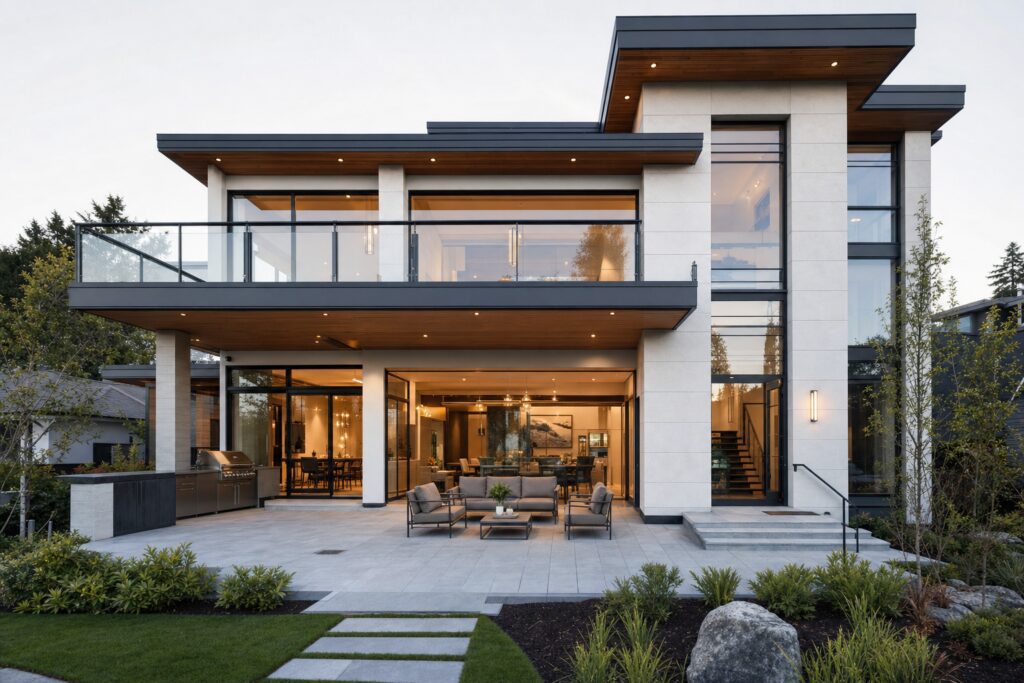
Most people assume framing is the simplest part of construction. It’s just boards and nails, right? But in Metro Vancouver, where seismic design requirements, engineered lumber, and complex architectural designs intersect, framing is one of the most technically demanding phases of any build. A qualified framer doesn’t just assemble wood. They interpret structural drawings, coordinate with engineers, ensure load paths align with BC Building Code standards, and set the stage for every trade that follows. Get the framing wrong, and you’ll deal with drywall cracks, uneven floors, and structural issues for decades.
A framer in construction is a skilled tradesperson who builds the skeletal structure of a building using wood, steel, or engineered lumber. They construct walls, floors, roofs, and structural supports based on architectural and engineering plans. In BC, framers must understand seismic bracing, snow load requirements, and how to work with complex designs common in Metro Vancouver’s custom homes and commercial projects.
Whether you’re planning a custom home in North Vancouver, a duplex conversion in Burnaby, or a commercial tenant improvement, understanding what framers do and how to choose the right crew can save you time, money, and structural headaches down the road.
What Does a Framer Actually Do?
Framers translate architectural and engineering plans into physical structure. They measure, cut, and assemble the skeleton of a building, creating the framework that supports everything from drywall to roofing. This includes walls, floor systems, roof trusses, door and window openings, and structural bracing.
It’s precision work. A framing crew reads blueprints, interprets structural notes, and coordinates with engineers when on-site conditions don’t match the plans. They install headers, calculate bearing points, and ensure load paths transfer correctly through the building.
In Metro Vancouver, framers also deal with seismic bracing requirements. BC sits in an active earthquake zone, so the BC Building Code mandates specific shear wall and hold-down anchor configurations. Framers install Simpson Strong-Tie connectors, engineer-specified strapping, and metal brackets that keep buildings intact during seismic events.
Arash Amini and the Avangard Development team coordinate directly with framing crews across Metro Vancouver, ensuring that structural plans align with municipal inspections and that every load-bearing element meets BC Building Code standards before the building inspector arrives.
Types of Framing Used in BC Construction
Not all framing is the same. Different building types and structural requirements call for different framing methods. Here’s what you’ll encounter in Metro Vancouver projects.
Platform Framing
Platform framing is the most common method in residential construction. Each floor is built as a separate platform, with walls constructed on top of each floor deck. It’s efficient, safe, and well-suited to wood-frame homes up to three or four stories.
This method allows electricians, plumbers, and HVAC contractors to work on one floor while framers continue building above. It’s the standard approach for custom homes, duplexes, and small multi-family projects in Vancouver.
Balloon Framing
Balloon framing uses continuous studs that run from foundation to roof, with floor joists attached to the studs. It’s rare in modern construction but occasionally appears in heritage renovations or tall, open-concept designs.
This method requires longer lumber and more complex fire-stopping, so most BC builders avoid it unless the design specifically requires continuous vertical framing.
Timber Frame and Post-and-Beam
Timber frame and post-and-beam construction use large, exposed structural timbers connected with traditional joinery or steel brackets. It’s common in West Coast contemporary homes, where exposed wood beams and open floor plans define the aesthetic.
These projects require collaboration between architects, structural engineers, and experienced framers who understand how to integrate timber elements with conventional framing. Avangard Development frequently works on custom home projects where timber framing creates dramatic interior spaces while meeting modern insulation and energy efficiency standards.
Steel Framing
Steel framing uses light-gauge steel studs instead of wood. It’s common in commercial construction, high-rise residential towers, and projects where fire resistance or dimensional stability is critical.
Steel doesn’t warp, shrink, or burn like wood. But it requires different tools, fasteners, and installation techniques. In Metro Vancouver, steel framing appears most often in commercial tenant improvements and mixed-use developments.
In Metro Vancouver’s wet climate, framers must account for lumber shrinkage and movement. Arash Amini always specifies engineered lumber for critical load-bearing headers and beams, reducing long-term settling and minimizing drywall cracks as the building ages.
BC Building Code Requirements for Framing
Framing in BC isn’t just about nailing boards together. The BC Building Code sets strict requirements for structural performance, fire safety, and seismic resistance. Framers must follow these standards, and inspectors verify compliance at multiple stages.
Seismic bracing is mandatory. Depending on the building’s height, location, and structural system, framers install shear walls, hold-down anchors, and blocking to resist lateral forces during an earthquake. The code specifies nail spacing, fastener types, and sheathing thickness.
Fire-stopping is another critical requirement. In multi-family buildings, framers must install fire-rated assemblies between units, seal penetrations, and ensure that wall and floor assemblies meet the required fire resistance rating. This includes blocking at the top and bottom of walls, fire-rated insulation, and proper detailing around ducts and pipes.
Load-bearing calculations determine how beams, headers, and posts transfer weight through the structure. Framers follow engineered plans that specify beam sizes, support spacing, and connection details. Any deviation requires approval from the project’s structural engineer.
When Avangard Development manages a project, we coordinate framing inspections with municipal building departments across Metro Vancouver, ensuring that rough framing, shear walls, and structural connections pass inspection before proceeding to the next phase.
Framing Materials: Wood, Engineered Lumber, and Steel
Material choice affects cost, performance, and long-term durability. Here’s what framers use and why it matters.
Dimensional Lumber
Standard 2×4, 2×6, 2×8, and 2×10 lumber remains the most common framing material in BC. It’s affordable, widely available, and familiar to every framing crew.
But dimensional lumber has limitations. It shrinks as it dries, warps under load, and varies in strength. Premium-grade lumber costs more but delivers better performance.
Engineered Lumber
Engineered lumber includes laminated veneer lumber (LVL), glue-laminated beams (glulam), I-joists, and oriented strand board (OSB). These products are stronger, more stable, and more consistent than dimensional lumber.
LVL beams handle longer spans without sagging. I-joists create open floor systems that accommodate plumbing and HVAC runs without compromising structural integrity. Glulam beams support heavy roof loads while creating dramatic architectural features.
Arash Amini specifies engineered lumber for critical applications in every Avangard Development project, especially on custom homes where open floor plans and large window openings demand high-performance structural elements.
Steel Studs and Framing
Steel studs are lighter, straighter, and more fire-resistant than wood. They’re ideal for commercial projects, high-rise construction, and areas where termites or moisture are concerns.
But steel framing requires specialized tools, different fasteners, and careful detailing to prevent thermal bridging. In residential projects, steel framing typically appears only in specific applications like basement walls or fire-rated assemblies.
For projects in North Vancouver and West Vancouver with steep slopes, we specify pressure-treated lumber for all framing in contact with concrete foundations. This prevents moisture wicking and rot, extending the building’s lifespan in BC’s wet climate.
Planning a build or renovation in Metro Vancouver?
Arash Amini and the Avangard Development team offer transparent, open-book construction management for residential and commercial projects across BC.
How Framing Fits Into the Construction Timeline
Framing happens after foundation work is complete and before any finishing trades start. It’s typically the fastest phase of construction, but it’s also the most critical for staying on schedule.
For a typical single-family home in Metro Vancouver, framing takes three to five weeks. This includes wall framing, floor systems, roof trusses, sheathing, and structural bracing. Larger projects or complex designs take longer.
Weather plays a role. Rain delays framing because exposed wood absorbs moisture, and wet lumber is harder to cut, nail, and install. Most framing crews in BC work through light rain but pause during heavy downpours or high winds.
Inspections also affect the timeline. Municipal building departments in Vancouver, Burnaby, and North Vancouver require rough framing inspections before walls are closed up. Scheduling these inspections early prevents delays.
On projects managed by Avangard Development, we coordinate framing schedules with permit timelines, engineer site visits, and subcontractor sequencing, ensuring that framing stays on track and inspections happen when they’re supposed to.
What to Look for When Hiring a Framing Crew
Not all framers are equally skilled. The quality of your framing crew affects structural integrity, long-term durability, and how smoothly the rest of the project proceeds.
Experience with BC Building Code
Framers must understand BC-specific requirements, including seismic bracing, fire-stopping, and insulation detailing. Ask how many projects they’ve completed in Metro Vancouver and whether they’ve worked on similar building types.
Ability to Read Engineered Plans
Modern construction involves engineered lumber, complex roof systems, and structural calculations. Your framing crew should be able to interpret structural drawings, understand load paths, and follow engineer specifications without constant supervision.
Coordination with Inspectors
Framers who regularly pass municipal inspections on the first attempt save time and money. Ask about their track record with local building departments and whether they’ve had to make corrections after inspection failures.
Quality of Workmanship
Walk past projects in the framing stage. Look for straight walls, consistent stud spacing, proper blocking around openings, and clean installation of structural connectors. Sloppy framing creates problems for every trade that follows.
When you work with Avangard Development, we vet and coordinate framing crews with proven track records across Metro Vancouver, ensuring that structural work meets engineering standards and passes inspections the first time.
Always verify that framers install blocking and backing for cabinets, grab bars, and wall-mounted fixtures during rough framing. Adding blocking later requires cutting into finished drywall, creating unnecessary expense and delays on custom home and renovation projects.
Common Framing Mistakes and How to Avoid Them
Even experienced framers make mistakes. Here’s what to watch for and how to prevent costly errors.
Incorrect Stud Spacing
Studs should be spaced 16 inches on center for most residential projects. Wider spacing reduces structural strength and complicates drywall installation. Always verify stud spacing before sheathing goes on.
Missing or Improper Headers
Every window and door opening requires a properly sized header to carry the load above. Undersized headers sag over time, causing drywall cracks and sticking doors. Follow engineered plans or consult a structural engineer.
Inadequate Bracing
Temporary bracing keeps walls plumb and square during construction. Permanent bracing resists wind and seismic forces. Skipping either creates long-term structural problems.
Poor Nailing Patterns
The BC Building Code specifies nail sizes, spacing, and edge distances for shear walls and structural sheathing. Incorrect nailing reduces the building’s seismic resistance and can fail inspection.
Ignoring Moisture Protection
Exposed framing must be protected from rain. Wet lumber shrinks as it dries, causing cracks, squeaks, and uneven surfaces. Tarps, temporary roofing, and quick sheathing installation prevent moisture damage.
On every Avangard Development project, we conduct regular site inspections during framing to catch issues early, verify that structural details match engineered plans, and ensure that work meets BC Building Code standards before moving forward.
Key Takeaways
- Verify framers understand BC seismic bracing and fire-stopping requirements
- Specify engineered lumber for headers and beams to prevent sagging
- Schedule rough framing inspections early to avoid timeline delays
- Check stud spacing and blocking before sheathing covers the frame
- Protect exposed framing from rain to prevent shrinkage and warping
Frequently Asked Questions
Framing is where your building comes to life. It’s the phase where plans turn into physical structure, where engineering meets carpentry, and where mistakes become expensive. Arash Amini has spent 25 years coordinating framing crews across Metro Vancouver, ensuring that every wall, beam, and truss meets BC Building Code standards and passes inspection the first time.
Planning a custom home, renovation, or commercial build in Metro Vancouver? Book a free consultation with Avangard Development to discuss your project. We’ll walk through structural requirements, coordinate with engineers and framers, and deliver a transparent, fixed-price approach to your build.